why do i need to know this?
You are most likely wondering “Why would I need to know all the kinds of sea turtles?” Well, its very simple. Many people come across turtles in the wild and aren’t sure what to do. Depending on the species, you might have to do something different to help it. For example, if you come across a endangered species, it is important to immediately report it to local wildlife authorities. Keep your distance to avoid stressing the animal and, if safe, take photos to share with experts. Now lets learn the different kinds of sea turtles.
archelon
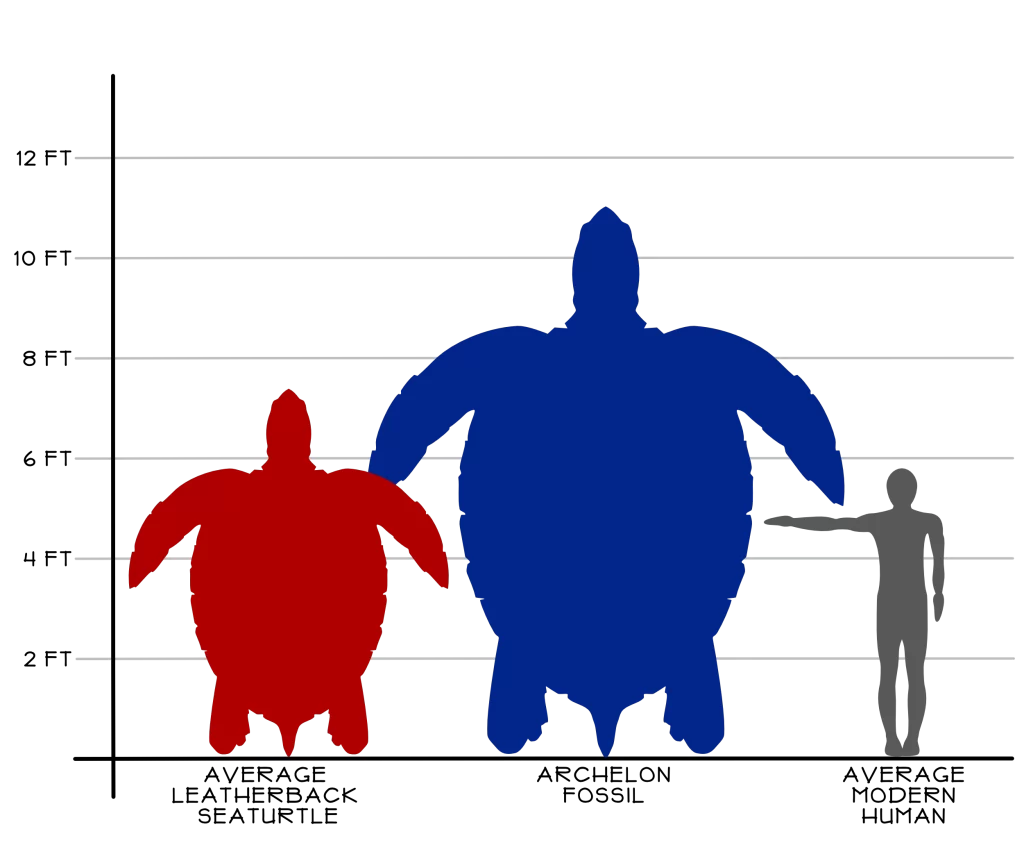
The Archelon was the largest sea turtle to ever live, a massive, air-breathing reptile that swam the Cretaceous seas. Measuring up to 15–16 feet in length and 13–16 feet wide, it possessed a leathery shell rather than a hard one, likely feeding on squid and jellyfish. It is currently extinct due to a combination of climate change, habitat loss, and increased predation. It lived during a time when most of North America was covered by a shallow ocean, about 75-65 million years ago. Weighed at two tons.
Leatherback sea turtle
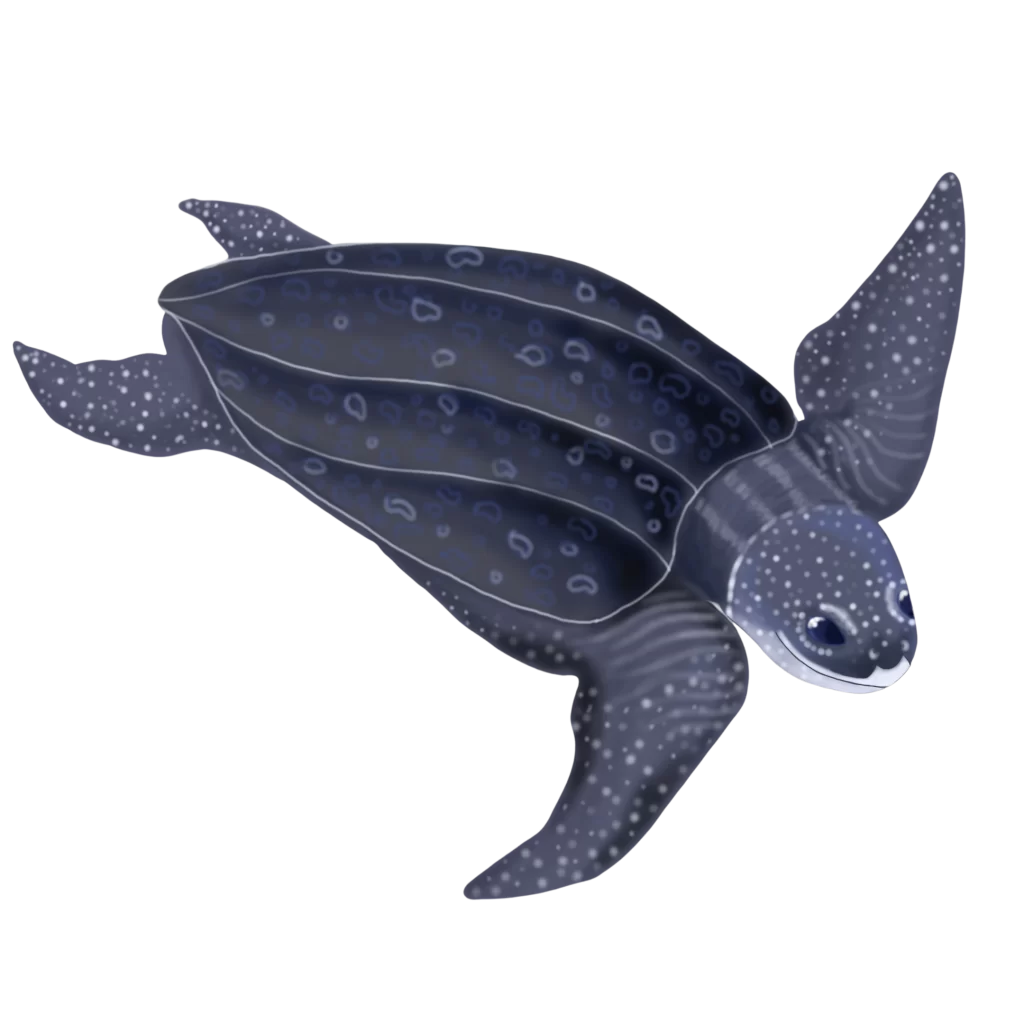
The leatherback sea turtle’s unique features include its leathery, flexible shell (lacking bony plates and scales, unlike other turtles), seven prominent ridges running down its back, and enormous front flippers without claws, all adaptations for deep diving and long migrations, making it the largest turtle species still alive, often black with pink/white spots. The leatherback sea turtle’s diet consists almost exclusively of soft-bodied ocean dwellers, primarily jellyfish and tunicates, though they also eat squid, fish, crustaceans, algae, and seaweed. Its inhabit the open ocean globally, from tropical to subarctic waters. The lifespan of a leatherback sea turtle is estimated to be 50 years or more, with some studies suggesting they can live over 90 years, potentially reaching 100 years or more.
green sea turtle
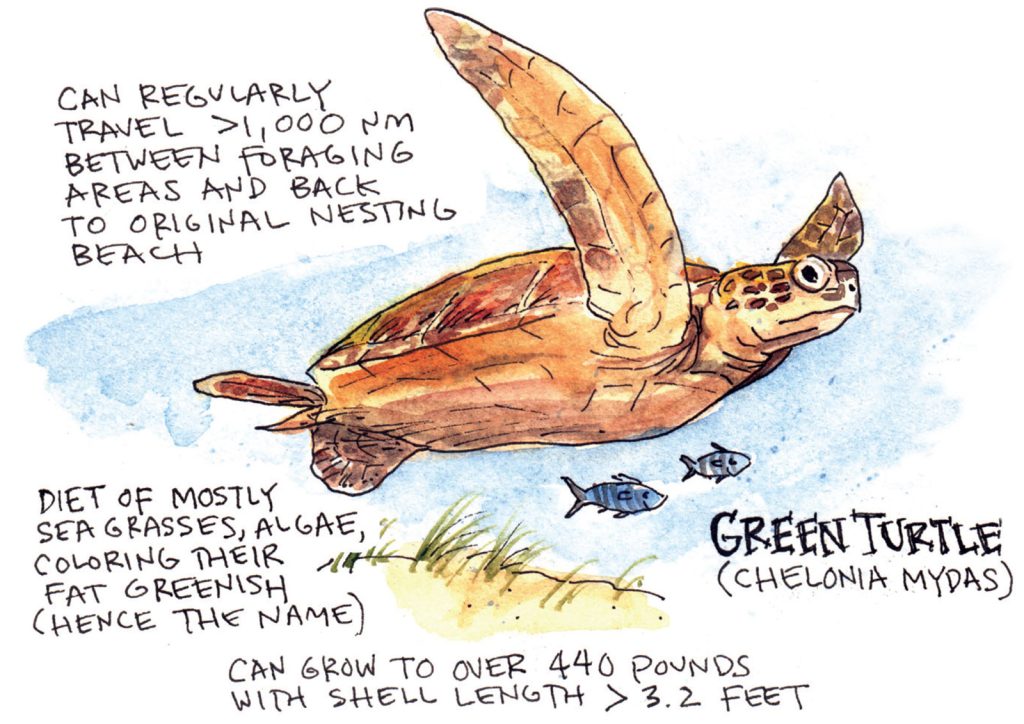
Green sea turtles, named for their green fat from a diet of seagrass and algae, making them the only herbivorous adult sea turtle; they migrate vast distances, live over 70 years, and are threatened by human activities but are recovering from endangerment. Females return to natal beaches to lay about 100 eggs in nests, with nest temperature determining the sex of hatchlings, which face high mortality. The green sea turtle is making a major comeback, recently reclassified by the IUCN Red List from Endangered to Least Concern globally due to a nearly 30% population surge since the 1970s
loggerhead sea turtle
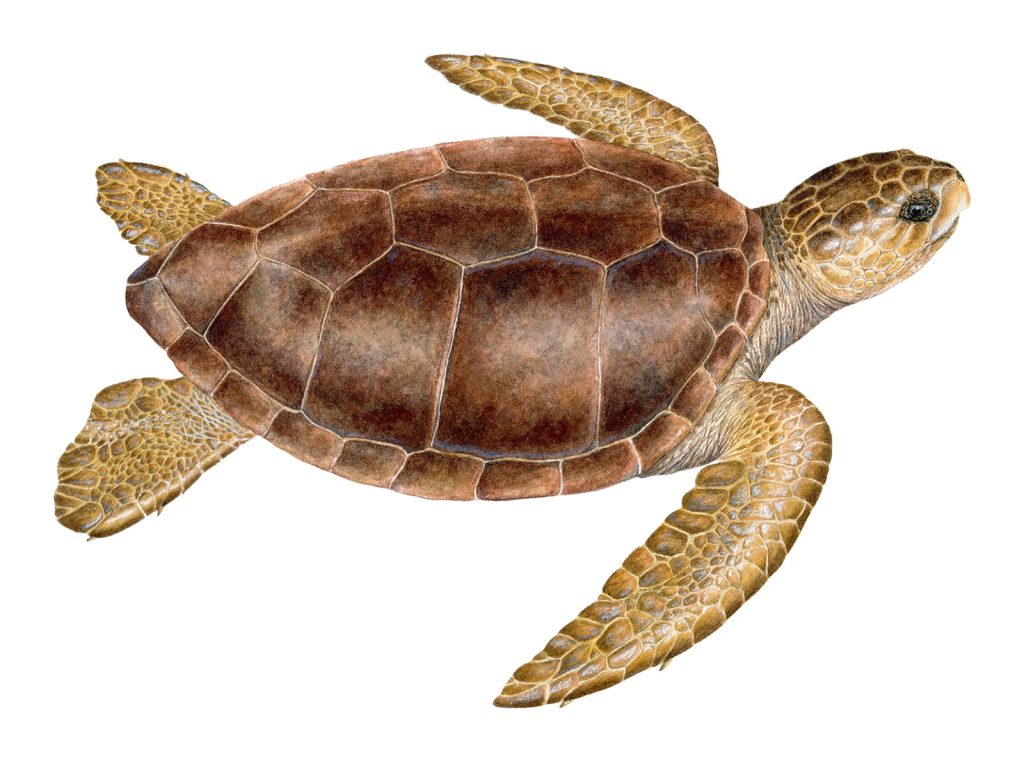
Loggerhead sea turtles are ancient marine travelers that have been swimming in our oceans for over 100 million years. Named for their massive, block-like heads and incredibly strong jaws, they are specialized hunters that can easily crush the hard shells of crabs and conchs. These turtles are true “world citizens,” often migrating thousands of miles across entire ocean basins, yet female loggerheads have a “biological GPS” that leads them back to the exact same beach where they were born decades earlier to lay their own eggs.
Kemp’s ridley sea turtle
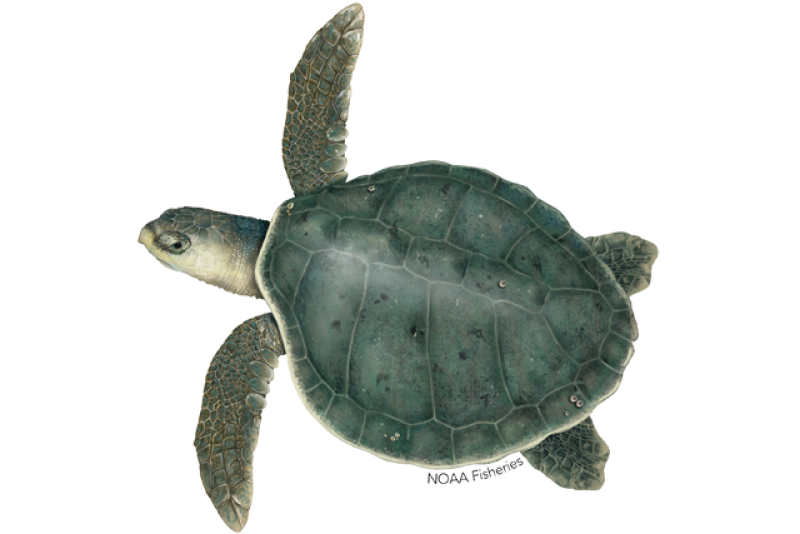
The Kemp’s Ridley sea turtle is the world’s smallest and most critically endangered sea turtle, with a circular olive-gray shell and a weight of 85–100 pounds. Primarily found in the Gulf of Mexico, they are unique for daytime nesting and feeding on crabs. Their populations are slowly recovering thanks to intense protection, but they remain threatened by fishing gear bycatch and habitat loss.
olive ridley sea turtle
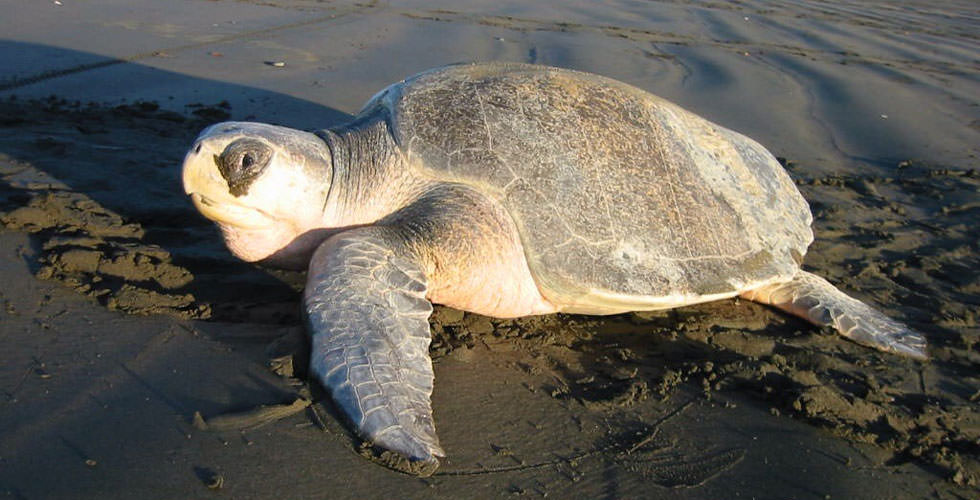
The Olive Ridley sea turtle (Lepidochelys olivacea) is the most abundant sea turtle species in the world, yet it remains classified as vulnerable globally due to significant historical population declines. These small, heart-shaped turtles are best known for their spectacular synchronized mass nesting events called arribadas, during which thousands of females simultaneously storm specific tropical beaches to lay their eggs. Primarily omnivorous and highly migratory, they spend much of their lives in the open ocean of the Pacific, Indian, and South Atlantic, feeding on everything from jellyfish and crabs to algae. Despite their large numbers, they face severe threats from fishery bycatch, habitat loss, and illegal egg poaching, making ongoing conservation efforts critical for their long-term survival.
Hawksbill Sea turtle
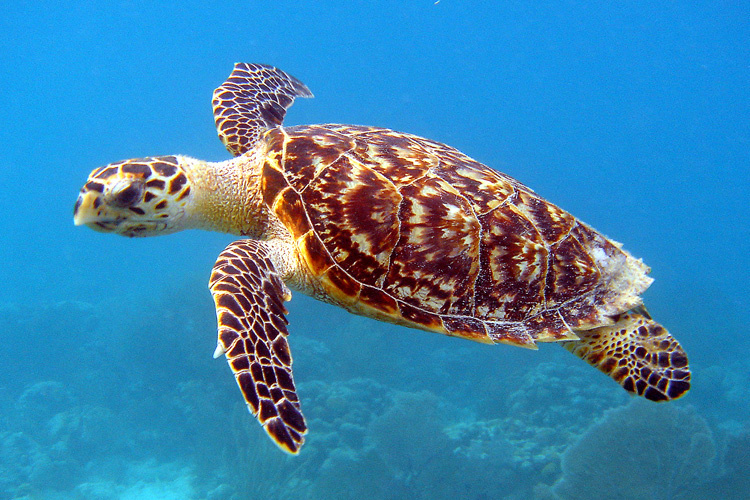
Hawksbill turtles are critically endangered sea turtles known for their hawk-like beak and beautiful, mottled shells, which historically made them targets for the illegal “tortoiseshell” trade. They are vital to coral reef health, using their narrow heads to eat sponges that would otherwise smother corals, and can live 50-60 years, growing up to 3 feet long. Found in tropical oceans, they possess unique overlapping shell plates (scutes) and two claws on each flipper, helping them navigate reefs while facing threats from habitat loss and fishing.
flatback sea turtle
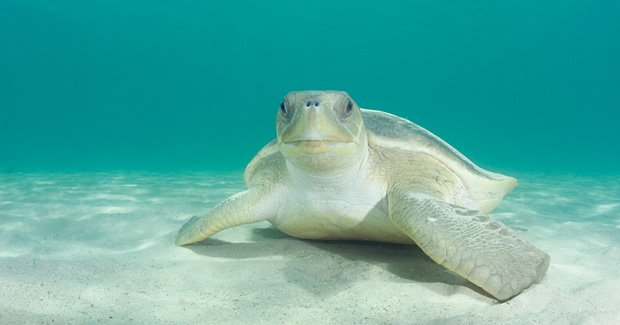
The Flatback sea turtle (Natator depressus) is a unique species endemic to the shallow, coastal waters and sandy beaches of northern Australia and Papua New Guinea. Named for their flat, olive-gray, upward-curved carapace, they are medium-sized, measuring up to 1 meter (3 feet) and weighing about 68–100 kg. Unlike others, they don’t have an oceanic pelagic phase and remain nearshore. They are carnivorous, eating soft-bodied prey like sea cucumbers and jellyfish, and are listed as Vulnerable by the Australian government.
thank you!
I hope you enjoyed my page on all the sea turtles and you learned something!


Leave a Reply to Taylor Cancel reply